

Longevity science has quickly shifted from a niche area of aging research to one of the most exciting frontiers in human health. But what is longevity science, exactly—and why is it gaining so much global attention?
At its core, longevity science focuses on understanding why we age, how biological aging differs from chronological age, and what evidence-based tools might help people live longer, healthier lives. Rather than simply treating disease after it appears, longevity science aims to support good health, reduce the risk of age-related diseases, and strengthen the body’s ability to repair itself at the cellular level.
With population aging accelerating worldwide, scientists, clinicians, and public health leaders are re-imagining how we extend not just life span, but health span—the years we live free of age-related chronic disease and disability.
Let’s break down what longevity science is, what it studies, and how it could shape the future of human longevity.
Longevity Science vs. Traditional Medicine
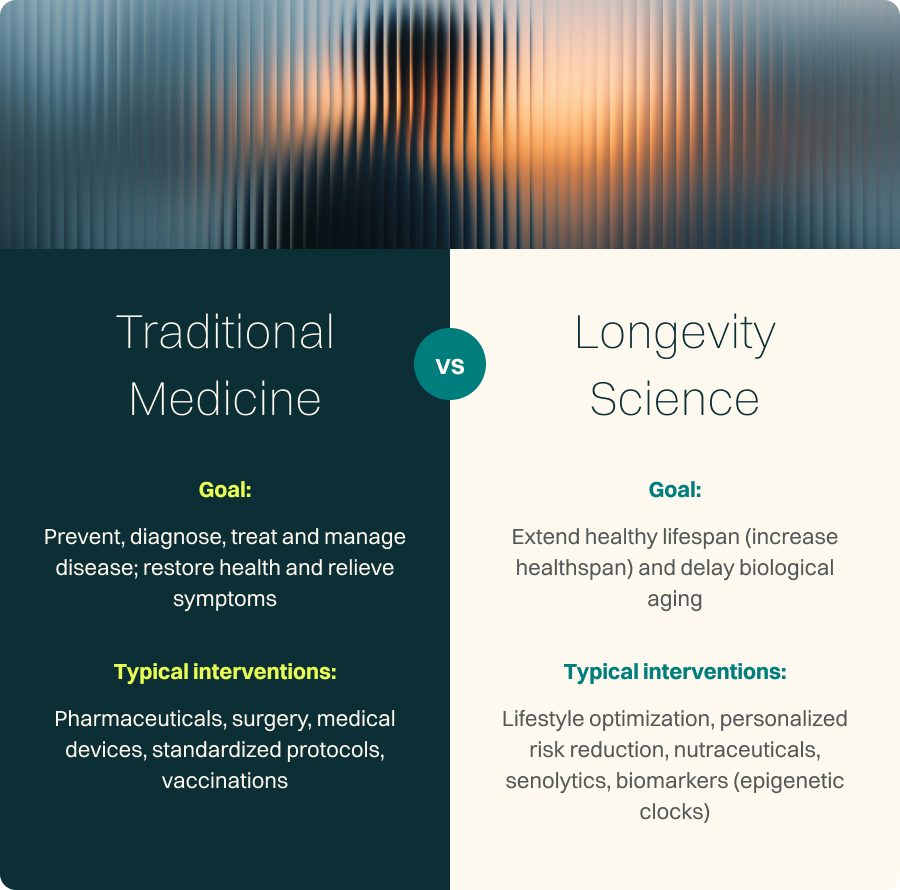
Classic medical care often centers on treating disease once symptoms show up: heart attacks, diabetes, cognitive decline, or chronic illness. Longevity science takes the opposite approach. It asks:
- What biological pathways drive the aging process?
- Why do chronic diseases cluster in older adults?
- Can we measure and slow the cellular mechanisms that lead to decline?
This shift—rooted in precision medicine and advanced diagnostics—helps identify risk factors before functional decline occurs. Epigenetic age tests, for example, measure your epigenetic age by assessing DNA methylation patterns, offering insights beyond simple chronological age. Understanding biological age empowers people to make data-informed decisions to improve metabolic health, immune resilience, and overall longevity.
What Longevity Science Studies
Longevity research spans multiple scientific areas—genetics, nutrition, metabolism, neuroscience, immunology, and regenerative medicine. Key topics include:
1. Cellular Aging and Senescence
Cells accumulate damage over time from stress, inflammation, environmental toxins, and natural wear. When cells become too damaged, they can enter cellular senescence—a state where they stop dividing but don’t die. While senescent cells play important biological roles, they can also contribute to:
- Chronic inflammation
- Cardiovascular diseases
- Cognitive decline
- Weakened immune system
- Age-related conditions such as osteoarthritis and neurodegenerative diseases
Reducing or clearing senescent cells is one focus of next-generation therapeutic modalities.
2. DNA Repair and Genetic Stability
Aging is closely tied to how effectively our cells repair DNA damage. Over time, DNA errors accumulate, contributing to:
- Chronic diseases
- Cancer risk
- Cognitive aging
- Reduced cellular repair
This is why longevity scientists study genetic markers, underlying DNA sequences, and pathways that maintain genomic stability.
3. Metabolic Health and Energy Production
Metabolic dysfunction is a hallmark of aging. Research explores how mitochondria (the cell’s powerhouses) change over time and how caloric restriction, fasting, or healthy fats may influence:
- Cardiovascular health
- Metabolic health
- Risk of chronic diseases
- Physical performance
- Cognitive function
Evidence suggests that lifestyle factors and targeted supplementation can help maintain metabolic resilience.
4. Immune System Aging
As we grow older, the immune system becomes less efficient at replacing damaged cells and defending against illness. This process—known as immunosenescence—increases vulnerability to:
- Chronic infections
- Cardiovascular disease
- Age-related inflammation
- Chronic stress consequences
Understanding immune aging is critical for supporting healthier aging across the global population.
5. Lifestyle Strategies
Longevity science emphasizes health behaviors that influence biological aging, including:
- Physical activity
- Quality sleep
- Healthy nutrition
- Mental health practices
- Avoiding chronic stress
These lifestyle factors interact with biological pathways that regulate inflammation, metabolic function, and cellular repair.
How Longevity Science Measures Aging
New tools now allow researchers and individuals to measure aging more precisely.
- Epigenetic Age Testing: Epigenetic age tests use epigenetic analysis to measure an aspect of biological aging.
- Advanced Diagnostics: Blood biomarkers, genetic testing, microbiome profiling, and digital technology help track how lifestyle factors shape long-term health.
- Clinical Trials and Animal Models: Studies of caloric restriction, senolytics, mitochondrial enhancers, and regenerative medicine are expanding rapidly.
- Population Research: The World Health Organization and global public health agencies study how aging patterns influence population growth, life expectancy, and equitable access to care.
These innovations help scientists identify interventions that may support a longer, healthier life.
What Longevity Science Suggests for Better Health Today
While longevity medicine is still evolving, research consistently highlights several strategies that may slow aging and support long-term well-being:
1. Prioritize Movement
Regular physical activity supports metabolic health, cardiovascular function, cognitive performance, and overall vitality.
2. Improve Sleep Quality
Consistent, quality sleep is linked to better DNA repair, reduced chronic stress, and improved cognitive function.
3. Follow a Nutrient-Rich Diet
Healthy fats, antioxidants, lean proteins, and plant-rich diets support metabolic stability and reduce risk of chronic disease.
4. Support Cellular Pathways With Evidence-Based Supplements
Longevity scientists study compounds that support cellular energy, mitochondrial function, and DNA repair pathways.
Science-backed formulations—including supplements designed for healthy aging, immune support, and metabolic resilience—are built on this emerging research.
5. Track Your Epigenetic Age Over Time
Understanding your epigenetic age allows you to personalize your strategies and monitor progress—something our epigenetic age tests were created specifically to help with.
The Future of Longevity Science
As global population aging continues, longevity science aims to help people live not just longer—but better. There have been new advancements in:
- Regenerative medicine
- Senolytic therapies
- Drug development
- Cellular rejuvenation techniques (including research on “young blood”)
- Personalized lifestyle interventions
These advancements may unlock new ways to extend lifespan and improve the quality of life for older adults and elderly patients around the world.
Ultimately, longevity science is leading a paradigm shift—from treating disease to preventing decline, preserving cellular function, and empowering people to live healthier, longer.
Final Takeaway
Longevity science is more than a trend—it’s a transformative field redefining what healthy aging means. By focusing on biological pathways, lifestyle factors, and evidence-based tools like our epigenetic age tests and science-backed supplements, individuals can take meaningful steps toward a healthier life today and a longer life tomorrow.
If you’re ready to better understand how you’re aging and start optimizing your health span, now is the perfect moment to explore this science-driven approach.
What is longevity science?
Longevity science focuses on understanding why we age, how biological aging differs from chronological age, and what evidence-based tools might help people live longer, healthier lives. Instead of treating disease after it appears, longevity science aims to support good health, reduce the risk of age-related diseases, and strengthen the body’s ability to repair itself at the cellular level.
What does longevity science study?
Longevity science spans multiple scientific areas—genetics, nutrition, metabolism, neuroscience, immunology, and regenerative medicine. Key topics include cellular aging and senescence, DNA repair and genetic stability, metabolic health and energy production, immune system aging, and lifestyle strategies such as physical activity, quality sleep, and healthy nutrition.
How does longevity science measure aging?
New tools measure biological aging more precisely, including epigenetic age testing, blood biomarkers, genetic testing, microbiome profiling, and digital technologies. Researchers also use clinical trials, animal models, and population research to understand how aging patterns influence health and longevity.
References
- López-Otín et al. Hallmarks of aging: An expanding universe. Cell 2023; https://doi.org/10.1016/j.cell.2022.11.001
- Kennedy et al. Geroscience: linking aging to chronic disease. Cell 2014; https://doi.org/10.1016/j.cell.2014.10.039
- Olshansky and Kirkland. Geroscience and Its Promise. Cold Spring Harb Perspect Med 2024; https://doi.org/10.1101/cshperspect.a041725
- Kroemer et al. From geroscience to precision geromedicine: Understanding and managing aging. Cell 2025; https://doi.org/10.1016/j.cell.2025.03.011
- Kirkwood. Understanding the odd science of aging. Cell 2005; https://doi.org/10.1016/j.cell.2005.01.027